



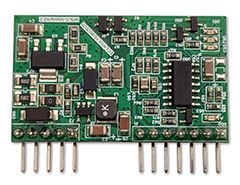
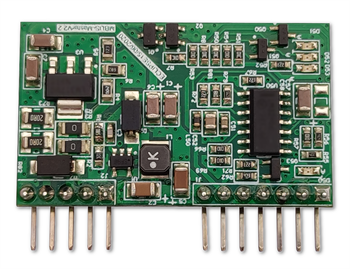
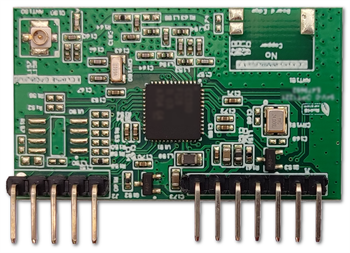
Which M-Bus – OMS Module is better for my project?
| ECL-MBUS | ECL-WMBUS | |
|---|---|---|
| Connectivity |
|
|
| Physical |
|
|
| Environmental |
|
|
| Power Input |
|
|
| Serial Interface |
|
|
| M-Bus Interface |
|
|
| # of Slaves | Max 64 Slaves | |
| Stack Support |
|
M-Bus OMS Modules
Meter Bus or M-Bus is a standard (EN 13757-2 physical and link layer, EN 13757-3 application layer) for remote reading of water, gas or electricity meters. In more detail, M-Bus was developed to eliminate the need to go by the meters to collect energy consumption data. Thanks to M-Bus, remote measurement of electricity, water and natural gas meters is provided very easily. Digital data of the utility network is collected in the M-Bus device and the meter consumption data is transferred to the IT network.
M-Bus OMS communication technology is classified as wired and wireless.
Wired M-Bus Module
M-Bus is a hierarchical system, consisting of a master, a number of slaves and two-wire connecting cable. All M-Bus equipment meters (slaves) are connected in parallel to the master through the transmission medium (cable). Current flows in master-slave direction with a change of 12 V, and in the answering direction with at least 11 mA. This allows remote powering of slaves and insensitivity to external interference besides serial communication.
Wireless M-Bus Module
Wireless M-Bus (wM-Bus) is an open standard developed for smart metering and Advanced Metering Infrastructure (AMI) applications. Wireless M-Bus network is based on a star topology network with master and slave devices described in the EN 13757 standard. Eclipse wireless M-Bus stack supports all the S, T, R and C (868 MHz), F (433 MHz) and N (169 MHz) operating modes. Eclipse modems support low power battery operation, that will allow long battery life time up to 5-10 years, depending on the water meter reading application scenario.
M-Bus OMS Modules
Eclipse M-Bus OMS module supports open, vendor independent communication interfaces and basic requirements for water metering developed according to standard Open Metering System specification of OMS-Group.